BWYPEX: Brian Wickham Young Person Exchange Program

An ICAR program aiming to give early-career researchers the opportunity to step outside their home organisation, immerse themselves in the work of ICAR members worldwide, and tackle a research topic that truly matters to the community. Along the way, they build lasting professional connections, develop new skills, and bring fresh perspectives back to their own organisations, making it a rewarding experience for hosts and participants alike.
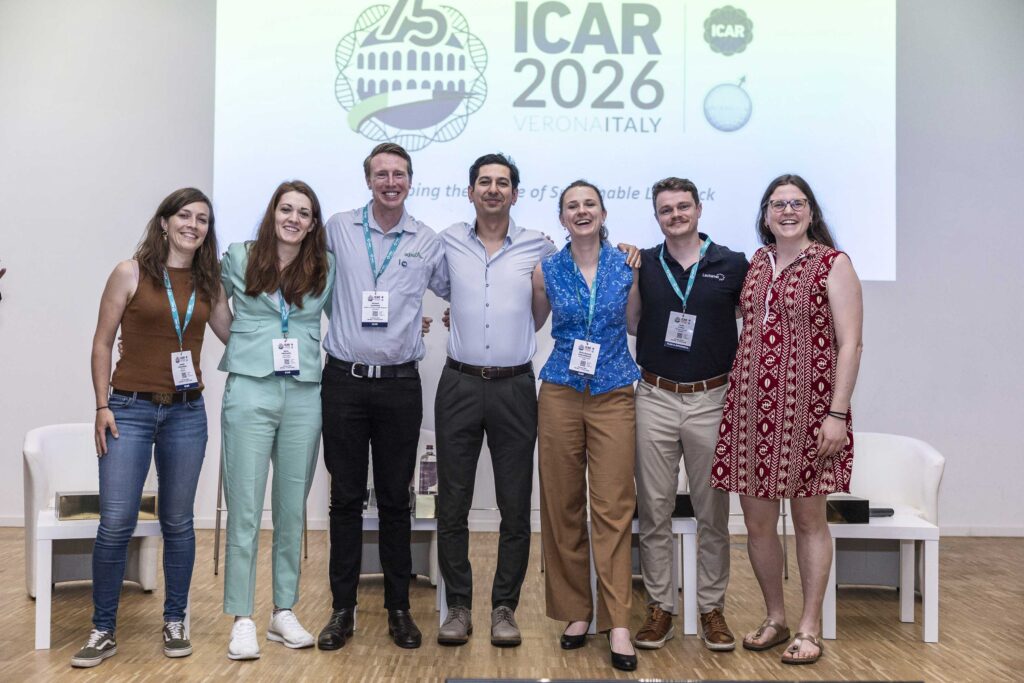
2024-2025 cohort at the ICAR Plenary in Verona

Key Elements of the early-career program

  •  Operated by ICAR through its working groups, a Steering Committee (the BWPEX committee) runs the program.
  • Topics of interest” are proposed by members and are aligned to the activities of our working
  • Early-career researchers should apply if they:
    • work or have a strong interest on one of the proposed topics
    • Work within one of the ICAR members or ICAR partners’ organisations
    • Are available to interact with a minimum of 2 external organisations situated in different geographical areas of their original one
  •  The funding model is partly based on direct funders and hosting organisations, supplemented by an ICAR in-house foundation.
  • Outcomes and reports from the early-career researchers are promote to improve ICAR activities and to the overall scientific community

Launch of the 3rd edition of the program coming soon

Inaugural edition videos

Sensor data for animal health and welfare
Katharina Schodl

The role of genetic improvement in creating greater integration between our dairy and beef industries
Jo Newton

Methane emissions and feed efficiency: where are we now and where do we want to be?
Caeli Richardson

2022-2023 BWYPEX cohort outputs

Beef from Dairy: The role of genetic improvement in creating greater integration between our dairy & beef industries
by Jo Newton (Dairy NZ)

Invited review: Global census on the development and implementation of direct genetic selection for enteric methane emissions in dairy cattle
by Caeli Richardson (ABACUS BIO)

Sensor data for animal health and welfare: present perspectives and future applications
by Katharina Schodl (ZuchData)

The state of the art about the development of midinfrared-based fatty acids predictions and their applications along the dairy food chain
by Michael Whittaker (CIS)

2024-2025 BWYPEX cohort outputs

Analysis of measurements of actual feed intake recorded automatically by feed bins / in commercial herds
by Sarah-Joe Burn (BOKU University)

Methane prediction by MIR
by Maria Frizzarin (Agroscope) and Amélie Vanlierde (CRA-W)

Tech comparison of methane measurements devices and alternative predictors
by Fazel Almasi (Agriculture Victoria)

Discovery, approval and management of genetic abnormalities in cattle
by Colin Lynch (Lactanet)

A survey to understand implementation of ICAR methods across milk recording organisations
by Meike Van Leerdam (Cornell University)

International genetic evaluation of sustainability traits in sheep
by Michale Asdrige (AGBU)